
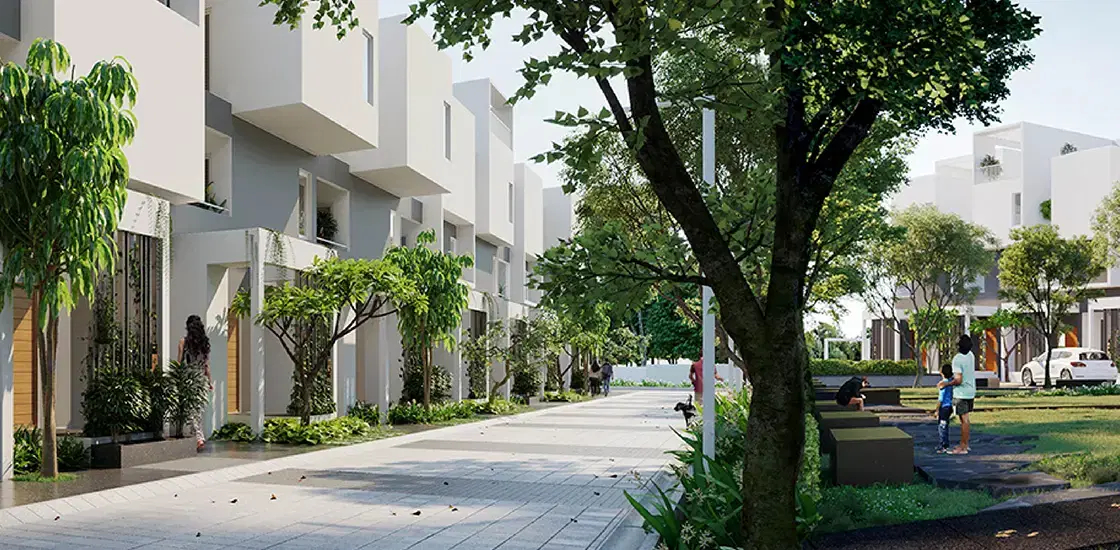
When people talk about property value, the conversation often revolves around prices and appreciation. In Tier-2 cities, however, long-term value tends to form in quieter, more practical ways. Homes that remain desirable years after purchase usually do so because they continue to meet everyday needs, adapt to change, and remain easy to live in rather than because they benefited from a short cycle of demand.
Understanding what sustains value over time requires a different lens from what is commonly applied in larger metro markets. In cities like Nagpur, long-term relevance matters more than momentary momentum.
How Long-Term Property Value Works Differently in Tier-2 Cities
Tier-2 cities are shaped by continuity rather than constant churn. Buyers here are often end users, families planning to stay put, or professionals seeking stability. As a result, value builds through steady demand rather than sudden spikes.
Long-term value in such markets is closely linked to how easily a home can be lived in, rented if needed, or resold without friction. Properties that perform well across these dimensions tend to hold their appeal even as the city evolves around them.
City-Level Factors That Support Long-Term Value in Nagpur
At a broader level, sustained value begins with city anchors that create reliable demand.
Employment and institutional presence play a central role. Areas connected to job clusters, healthcare hubs, educational institutions, and administrative centres tend to attract consistent residential demand over time.
Infrastructure and connectivity also shape value, particularly when improvements reduce commute uncertainty rather than merely adding new routes. Roads, metro corridors, and highway access influence where families are willing to settle long term.
Equally important is planning direction. Locations that align with future serviceability, zoning clarity, and civic support tend to age better than areas that rely solely on present convenience.
Why Micro-Markets Matter More Than City Names
Within the same city, different micro-markets attract different types of demand. Long-term value depends less on the city label and more on the nature of demand within a specific pocket.
Employment-linked corridors often see steady rental demand driven by working professionals. Family-driven residential belts tend to show lower turnover, as residents upgrade within the same area rather than move away. Central and legacy locations benefit from scarcity, even as buildings age and redevelopment becomes complex. Infrastructure-dependent growth zones can offer value over time, but only when development timelines align with actual livability.
Understanding which type of demand a micro-market attracts helps explain why some areas retain relevance quietly while others fluctuate.
The Family-Ecosystem Effect in Established Residential Belts
In Tier-2 cities, family ecosystems often sustain value more reliably than aspirational positioning. Areas with schools, healthcare access, daily conveniences, and familiar neighbourhood rhythms tend to attract repeat buyers and long-term residents.
In Nagpur, belts such as Narendra Nagar, Manish Nagar and Besa have evolved around this kind of family-led demand. Over the years, while working closely in this micro-market, we at Maxx Builders and Developers have seen that homes supporting everyday routines and long-term settlement tend to remain relevant longer than those driven primarily by launch activity.
This kind of demand creates stability, which in turn supports resale and rental interest even as newer areas emerge.
Why Building Quality and Planning Decide How Value Ages
Location may draw buyers initially, but building performance determines how value holds over time. Layout efficiency, light, ventilation, and material choices influence daily comfort and long-term upkeep.
Homes that are planned well tend to feel usable years later, even as family needs change. Maintenance predictability and sensible design decisions often reduce friction within societies and help buildings age more gracefully.
Over time, these factors influence how confidently future buyers and tenants evaluate the property.
Rentability as a Predictor of Long-Term Property Value
In Tier-2 cities, rentability is often a reliable indicator of long-term value. Homes that attract stable tenants usually benefit from functional layouts, manageable maintenance, and convenient access to daily infrastructure.
Even buyers purchasing for self-use benefit from considering rental appeal. Properties that are easy to rent are often easier to resell, as they appeal to a broader base of buyers and investors.
This relationship between rental demand and resale comfort is particularly visible in markets where liquidity matters more than rapid appreciation.
What Buyer Reviews Reveal About Value That Lasts
Over time, resident feedback tends to converge around a few themes. Issues related to maintenance quality, water reliability, noise, parking clarity, and society management often shape long-term satisfaction.
Homes that consistently avoid these friction points tend to develop stronger reputations within their micro-markets. This reputation influences how quickly properties change hands and how confidently they are priced.
How Families Can Evaluate Long-Term Value Before Buying
Evaluating long-term value does not require forecasting prices. It involves observing fundamentals that tend to remain relevant over time.
Families can focus on:
- what sustains demand in the location
- how the building is likely to age
- whether the home would be easy to rent if circumstances change
- how the neighbourhood functions today and how it is likely to evolve
These questions often provide clearer guidance than surface comparisons.
Aenean arcu metus, suscipit ac sagittis vel, varius vulputate purus. Vestibulum eget felis at ipsum suscipit elementum eget a nulla. Curabitur auctor dignissim vestibulum. Praesent vel imperdiet nunc, sit amet venenatis sapien. Aenean quis varius nibh, vel egestas metus. Aenean blandit varius lacinia. Praesent imperdiet egestas aliquet. Integer luctus ex quis feugiat malesuada.
Jane Smith
Closing Perspective
In Tier-2 cities like Nagpur, long-term residential value is built steadily. Homes retain relevance because they continue to be chosen by families, tenants, and buyers year after year.