

Reaching the final shortlist is often the most mentally exhausting stage of homebuying. After weeks of searching, families usually narrow their options down to two or three residential projects. At this point, confusion often increases instead of reducing. Each project seems acceptable, differences appear minor, and opinions vary depending on which site was visited most recently.
This experience is especially common in Tier-2 cities like Nagpur, where pricing, layouts, and amenities across projects often look similar on paper. What buyers need at this stage is not more information, but a clearer way to compare what already exists.
Why Comparing Shortlisted Projects Feels Harder Than Expected
Early in the search, decisions feel easier because choices are eliminated quickly. Once only a few options remain, comparisons become subtle rather than obvious. Buyers start weighing trade-offs instead of rejecting clear mismatches.
Confusion usually arises because all remaining projects meet basic requirements. Price differences feel marginal. Locations are within familiar areas. Amenities overlap. Without a structured method, buyers keep adding new factors instead of deciding which ones truly matter.
Why Surface-Level Comparisons Stop Working
Most buyers begin comparisons using visible metrics such as carpet area, price per square foot, number of amenities, or possession timelines. Property portals and brochures are designed to highlight these details, which makes them useful at the discovery stage.
At the final shortlist stage, these metrics often converge. Two projects may differ slightly in size or price, but not enough to justify a clear decision. Continuing to compare at this level usually increases doubt rather than clarity.
What separates projects at this point is rarely captured fully in listings.
How Tier-2 Cities Make Comparison More Complex
In larger metros, brand hierarchy and micro-market positioning often guide decisions. In Tier-2 cities, the landscape is flatter. Projects are closer in scale and pricing, and branding differences are more subtle.
In Nagpur, two projects within the same locality can vary significantly in execution quality, access roads, drainage, or surrounding development. These differences affect daily living but are not always visible online.
Because Tier-2 buyers are usually end users planning long-term stays, these subtleties carry more weight. A small compromise today can feel larger over time.
A Simple Framework to Compare 2–3 Projects Calmly
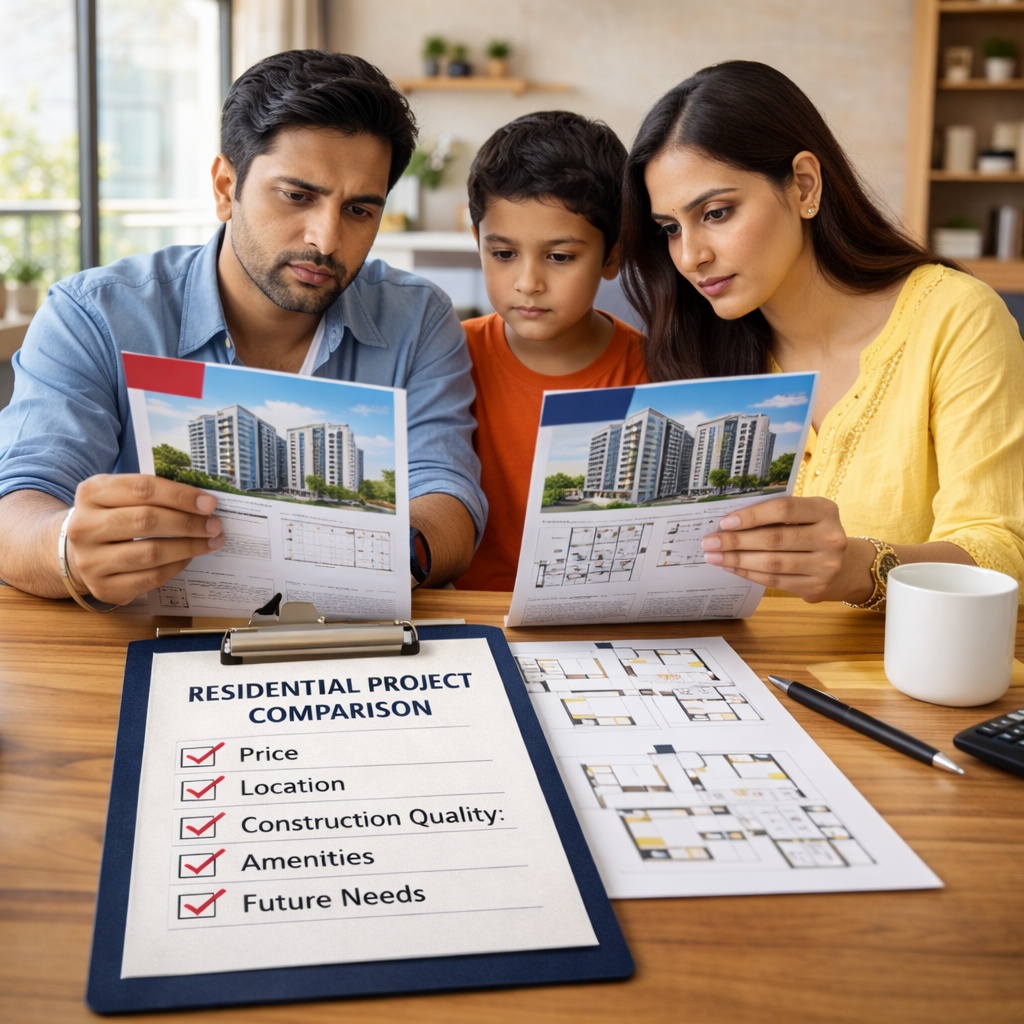
Clarity improves when comparisons are reduced to a small number of decision-critical factors. Instead of evaluating everything at once, it helps to assess projects through a consistent framework.
Start by looking at location and micro-market reality. Consider approach roads, traffic flow, nearby construction, and everyday convenience rather than just the locality name.
Next, evaluate builder execution and delivery confidence. Past delivery behaviour, construction progress, and how clearly timelines are communicated matter more than promised speed.
Then examine unit planning and livability. Room proportions, circulation, light, and ventilation influence comfort long after possession.
Legal and documentation clarity should follow. What is written and clearly defined often matters more than what is verbally explained.
Finally, assess total cost and maintenance predictability. A home that is easy to maintain and manage tends to remain comfortable and liquid over time.
What to Compare First and What to Ignore Initially
When comparing two or three projects, it helps to separate essentials from enhancements. Essentials usually include location suitability, execution reliability, and livability. Enhancements such as additional amenities or interior finishes can be evaluated later.
Ignoring minor differences early allows buyers to focus on fundamentals. Once one project begins to align better on core factors, secondary preferences often resolve themselves naturally.
How Site Visits Change the Comparison
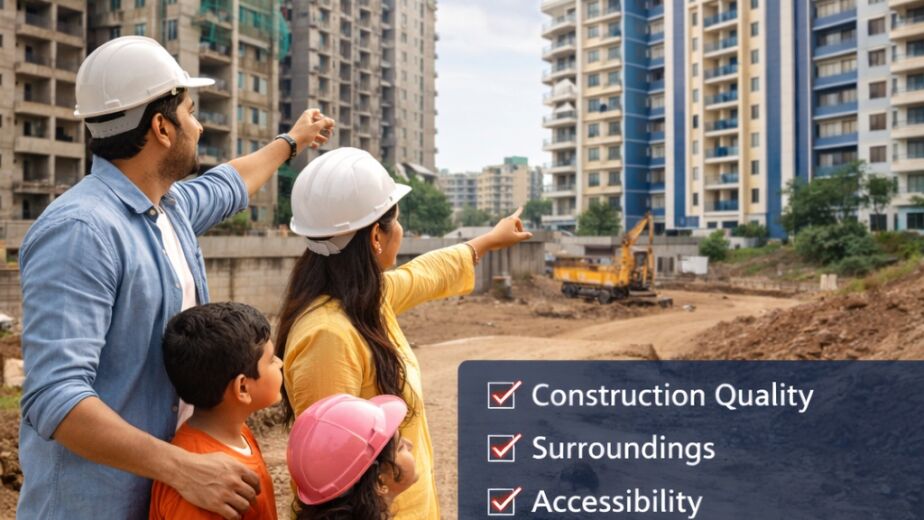
Site visits often bring clarity that spreadsheets cannot. Seeing the actual surroundings, construction progress, and access conditions helps buyers reassess priorities.
In our experience at Maxx Builder and Developers, many Nagpur families arrive at site visits focused on comparing specifications. They leave discussing aspects such as planning efficiency, construction discipline, and how the neighbourhood feels at different times of day. This shift usually simplifies the comparison rather than complicating it.
Using Reviews and Documents Without Getting Misled
Online reviews and buying guides from platforms like Housing.com, 99acres, and MagicBricks are useful when read correctly. Individual complaints matter less than recurring themes. Consistency across multiple sources often reveals more than isolated experiences.
Documents should be reviewed with the same mindset. Agreements, payment schedules, and specifications help confirm what is fixed and what is flexible. Comparing projects using written terms rather than verbal explanations often removes ambiguity.
Making the Final Call Without Second-Guessing
Once comparisons are reduced to a few meaningful factors, decisions tend to feel steadier. The goal is not to find a perfect project, but one that aligns best with long-term priorities.
Confusion usually fades when buyers stop trying to optimise everything at once. Choosing structure over speed often leads to greater confidence.
Aenean arcu metus, suscipit ac sagittis vel, varius vulputate purus. Vestibulum eget felis at ipsum suscipit elementum eget a nulla. Curabitur auctor dignissim vestibulum. Praesent vel imperdiet nunc, sit amet venenatis sapien. Aenean quis varius nibh, vel egestas metus. Aenean blandit varius lacinia. Praesent imperdiet egestas aliquet. Integer luctus ex quis feugiat malesuada.
Jane Smith
Closing Perspective
Comparing two or three residential
projects is rarely about finding dramatic differences. It is about identifying
which option holds up better when evaluated calmly and consistently.
In Tier-2 cities like Nagpur, where
homes are chosen for long-term living, clarity comes from reducing noise rather
than adding detail. A simple framework often reveals the answer that felt
elusive at first, allowing families to move forward with greater certainty and
peace of mind.