
Carpet area is often treated as the most reliable way to compare homes. It feels measurable and objective, especially when buyers want clarity after years of confusing built-up and super built-up figures. Carpet area plays an important role in transparency, but it does not explain how a home will actually work once it is furnished and lived in.
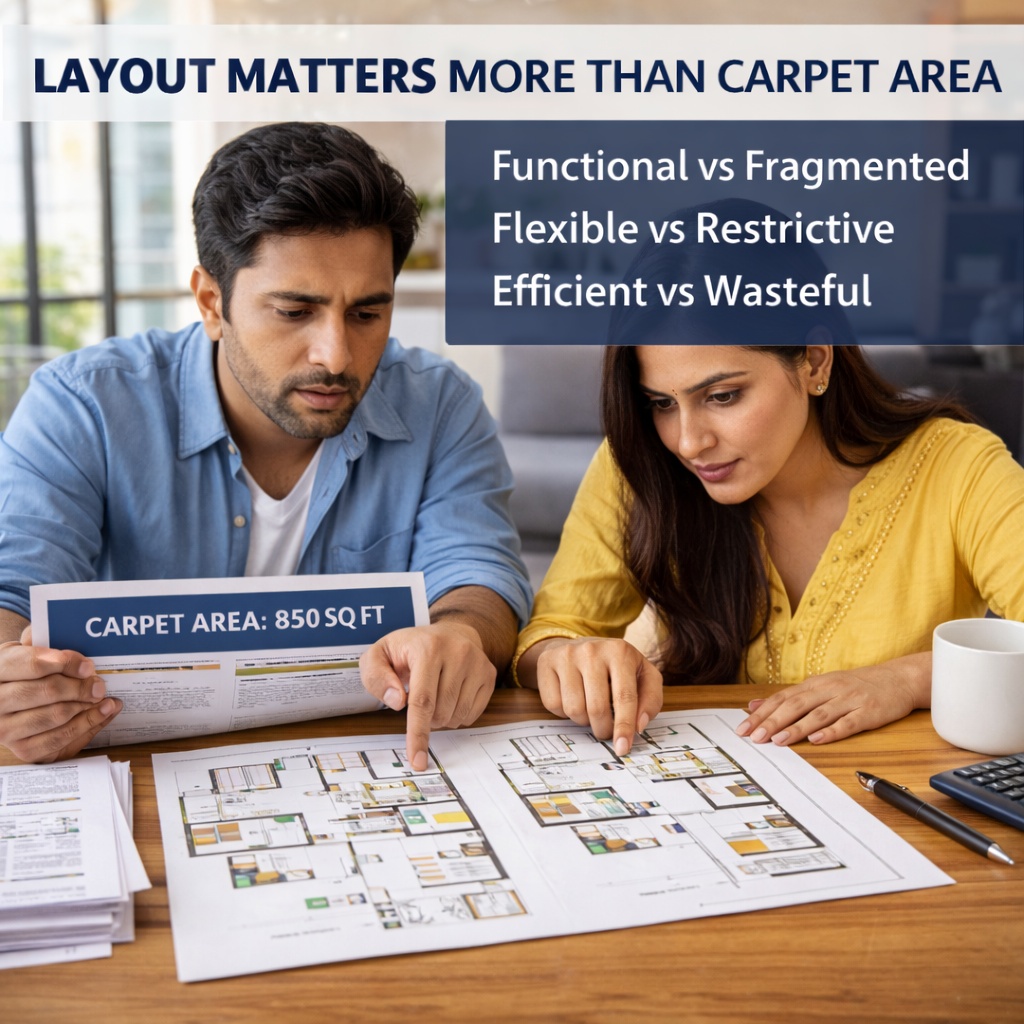
What determines everyday usability is not how much area exists, but how that area has been planned. Layout planning decides whether space is functional or fragmented, flexible or restrictive, efficient or wasteful. This difference becomes visible only when buyers move beyond numbers and start reading the floor plan carefully.
Carpet Area Tells You How Much Space Exists. Layout Tells You How That Space Behaves.
Two homes with the same carpet area can feel entirely different once occupied. This happens because carpet area does not account for how space is distributed internally.
Layout planning controls:
- how much area is lost to corridors and circulation
- whether rooms are proportioned for real furniture sizes
- whether doors, windows, and passages conflict with use
- how naturally people can move through the home
A poorly planned layout can consume usable space without reducing the carpet area on paper. A well-planned layout can make even a modest home feel efficient and composed.
This distinction is one of the most common regrets buyers express after moving in.
Dead Space Is Invisible Until You Live There
One of the least discussed aspects of layout is wasted space. Long passages, sharp corners, and deep rooms with limited daylight often look acceptable in drawings but become problematic in daily use.
Dead space shows up when:
- furniture blocks movement paths
- rooms feel narrow despite adequate area
- storage solutions feel forced rather than natural
Once a home is furnished, these inefficiencies reduce usable area far more than buyers expect. Carpet area does not capture this loss. Layout planning does.
Furniture Logic Is a Real Test of Planning Quality
Buyers often evaluate layouts visually but forget to test them practically. A layout should allow standard furniture placement without awkward compromises.
A well-planned home allows:
- beds to be placed without blocking wardrobes
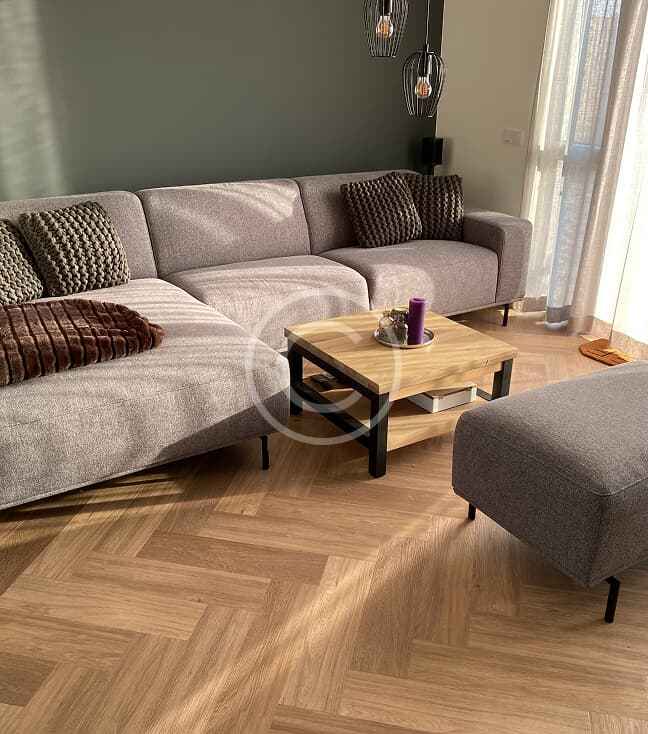
- sofas to face naturally without cutting circulation
- dining areas to function without encroaching on passages
When furniture placement feels forced, the home begins to feel constrained, regardless of carpet area. This is why floor plans should always be evaluated with furniture in mind.
Layout Determines Privacy More Than Size
Privacy within a home is shaped by zoning, not square footage. The placement of bedrooms relative to living areas, kitchens, and entrances matters far more than room size alone.
Homes where private spaces are exposed to frequent movement tend to feel unsettled. Homes where planning creates natural separation allow different activities to coexist comfortably.
This becomes especially important in households with overlapping routines, work-from-home setups, or visiting guests.
Light and Ventilation Depend on Planning, Not Area
Natural light and airflow are governed by proportions and orientation, not just window count. Deep rooms, narrow widths, or blocked openings often restrict light even in larger homes.
Thoughtful layout planning allows daylight and ventilation to penetrate living spaces more evenly. Over time, this affects comfort, energy use, and how pleasant a home feels during different seasons.
Buyers frequently realise this only after living in the space, when layout decisions made on paper begin to influence everyday comfort.
Layout Determines How Adaptable a Home Will Be Over Time
Families rarely use a home the same way throughout their lives. Children grow, work patterns change, and storage needs evolve.
Layouts that are rigid struggle to adapt. Layouts that are efficient and flexible absorb change more easily. This adaptability often matters more than additional square footage when homes are lived in for long periods.
At Maxx Builder and Developers, a significant number of buyers who approach us come with floor plans from other projects and ask for help understanding why the spaces feel tight despite similar carpet areas. These conversations usually reveal that planning efficiency, not size, is the limiting factor.
Carpet Area Still Matters, But Only as a Starting Point
Carpet area remains essential for transparency and comparison. It establishes a baseline for what is being sold.
The mistake many buyers make is stopping there. The floor plan is the document that reveals how that area is organised and whether it supports real living. Comparing both together leads to better decisions than relying on numbers alone.
Why This Matters in Nagpur’s Residential Context
In Nagpur, many buyers are choosing homes intended for long-term use rather than short investment cycles. In such cases, layout inefficiencies compound over time.
Homes that are planned well tend to remain comfortable even as needs change. Homes that rely on size alone often feel limiting once daily routines settle in.
Understanding layout quality helps buyers avoid compromises that only become apparent after possession.
Aenean arcu metus, suscipit ac sagittis vel, varius vulputate purus. Vestibulum eget felis at ipsum suscipit elementum eget a nulla. Curabitur auctor dignissim vestibulum. Praesent vel imperdiet nunc, sit amet venenatis sapien. Aenean quis varius nibh, vel egestas metus. Aenean blandit varius lacinia. Praesent imperdiet egestas aliquet. Integer luctus ex quis feugiat malesuada.
Jane Smith
Closing Perspective
Carpet area explains quantity. Layout planning explains usability.
Reading a floor plan carefully, visualising movement, and testing furniture placement often reveal more than surface comparisons. While listings and brochures help narrow choices, true clarity emerges when buyers understand how space has been planned to work, not just how much of it exists.