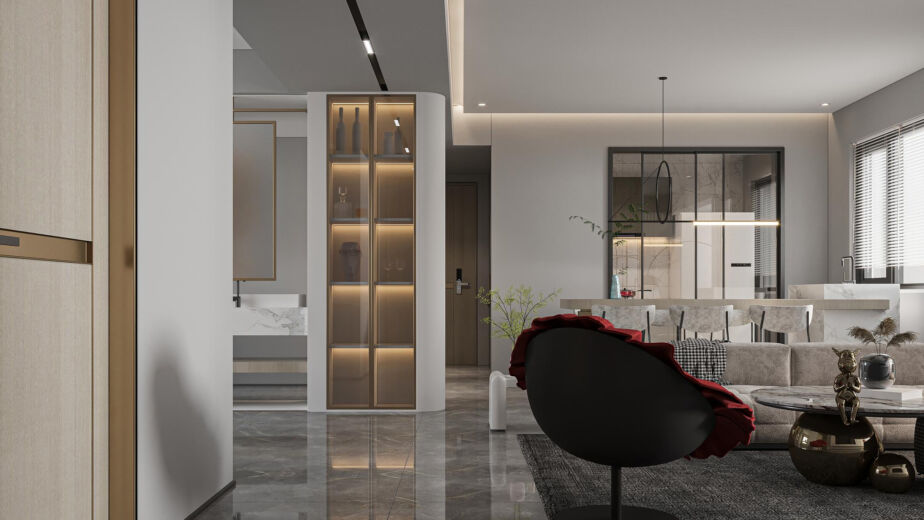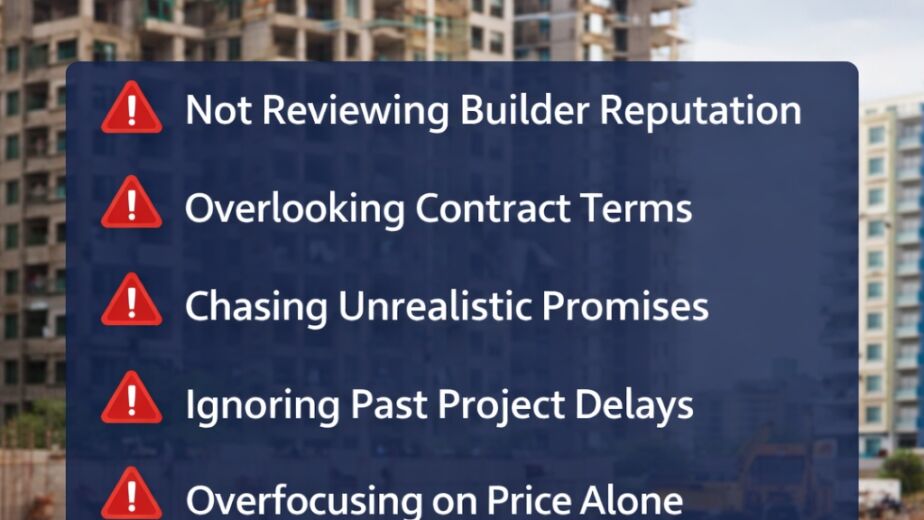

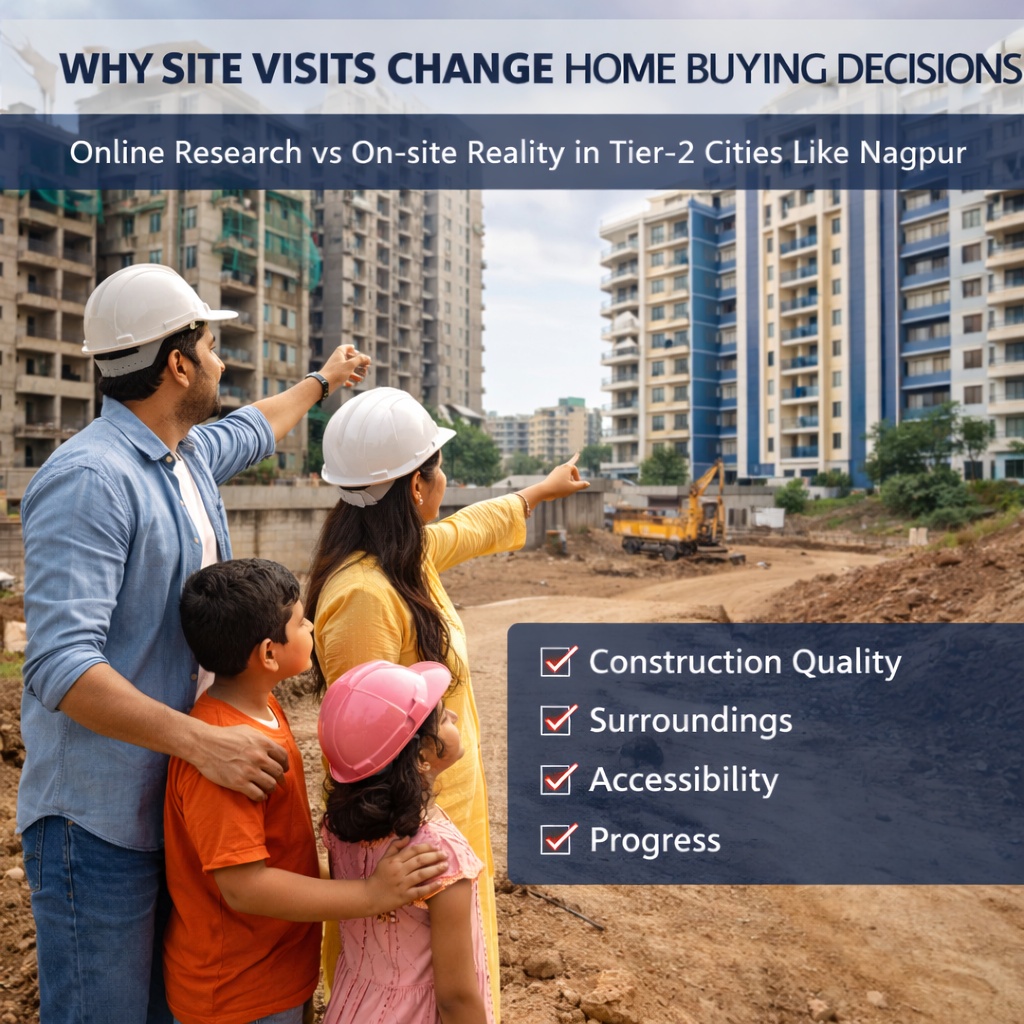
Homebuyers today begin their search online. Listings, brochures, walkthrough videos, and sample flat images make it possible to compare multiple projects quickly. Specifications are clearly listed, amenities are explained, and price ranges feel easy to evaluate. For many families, this creates a sense that most of the decision work is already done before stepping out.
Yet, across Tier-2 cities, buyers often describe a noticeable shift in perspective after their first site visit. What looked similar on screen begins to feel different on ground. This change does not come from discovering something wrong, but from understanding context that digital material cannot fully convey.
Why Online Research Feels Sufficient at First
Property portals and brochures are designed to communicate clarity. Floor plans show dimensions, renderings present finished spaces, and sample flats demonstrate how rooms might be furnished. For buyers managing busy schedules, this information feels complete enough to shortlist confidently.
Online research is useful and necessary. It helps narrow options, compare prices, and understand what is being offered. What it cannot do is communicate scale, surroundings, and execution with full accuracy. These gaps become apparent only during a physical visit.
What a Site Visit Reveals That Brochures Cannot
The most immediate change buyers notice on site is how space actually feels. Ceiling height, passage widths, column placement, and room proportions become clearer when walked through. Even homes with similar carpet areas can feel very different once these elements are experienced directly.
Natural light and ventilation are also easier to judge in person. The direction of windows, airflow across rooms, and the effect of neighbouring buildings or open spaces shape comfort in ways that drawings cannot fully predict. Sound levels, traffic noise, and nearby activity also become more apparent during a visit.
Another aspect buyers observe is construction execution. Finishing quality, site organisation, material storage, and the pace of work offer signals about discipline and planning. These are not proofs of outcomes, but they help buyers form a more grounded impression.
Why This Gap Is Larger in Tier-2 Cities
In Tier-2 cities, variation between projects is often higher. Two developments in the same locality can differ meaningfully in planning quality, access, and execution. Infrastructure and surrounding development are also still evolving in many areas, making local context more important.
In a city like Nagpur, approach roads, drainage patterns, and neighbouring land use can vary within short distances. These details may not be obvious online, but they influence daily living. Site visits help buyers distinguish between temporary conditions and structural realities.
Because Tier-2 markets have fewer comparable alternatives than larger metros, these observations carry more weight in decision-making.
How Site Visits Change Buyer Priorities
Buyers often arrive at a site visit focused on price, amenities, and specifications. After spending time on ground, priorities tend to shift. Questions move toward planning efficiency, construction quality, access, and long-term usability.
In our experience at Maxx Builder and Developers, many buyers begin the visit with a checklist based on brochures but leave discussing aspects such as daylight, circulation, and how the surrounding area feels at different times of day. This change reflects a move from comparison to evaluation.
Sample Flats and the Reality of Living Conditions
Sample flats serve an important purpose. They communicate design intent and help buyers visualise furnished spaces. However, they are controlled environments. Actual living conditions are shaped by factors outside the sample unit, including neighbouring buildings, access roads, and shared areas.
Visiting the site allows buyers to place the sample flat experience within its real context. This helps reduce expectation gaps later and leads to more informed choices.
Why Repeated Visits Add Clarity
Many buyers find value in visiting the site more than once. Different times of day reveal how light moves through the home and how traffic patterns change. In under-construction projects, observing progress over time helps buyers understand execution consistency rather than surface perfection.
Repeated visits are not about scrutiny. They are about familiarity. Comfort with a decision often grows as uncertainty reduces.
Site Visits as a Trust-Building Step
It is important to view site visits as part of a healthy buying process rather than a test of intent. Online material communicates vision and plans. Site visits provide execution and context. Builders confident in their planning and processes generally welcome informed buyers who want to understand the project better.
This approach benefits both sides by aligning expectations early.
Using Site Visits More Effectively
Families can make site visits more useful by slowing down and observing details that influence daily life. Walking the approach road, noting light and airflow, and asking questions about construction and timelines often reveal more than finishes alone.
Paying attention to how questions are answered on site can also provide insight into transparency and preparedness.
Aenean arcu metus, suscipit ac sagittis vel, varius vulputate purus. Vestibulum eget felis at ipsum suscipit elementum eget a nulla. Curabitur auctor dignissim vestibulum. Praesent vel imperdiet nunc, sit amet venenatis sapien. Aenean quis varius nibh, vel egestas metus. Aenean blandit varius lacinia. Praesent imperdiet egestas aliquet. Integer luctus ex quis feugiat malesuada.
Jane Smith
Closing Perspective
For many buyers, the moment of clarity comes not from a brochure or a price sheet, but from standing at the site and seeing how everything comes together. In Tier-2 cities like Nagpur, where homes are often chosen for long-term living, this context matters.
Site visits replace assumptions with observation. They help buyers move from comparing options to understanding what they are committing to. Decisions made with this clarity tend to feel steadier long after possession.